Devlog 4: walking, running, and climbing walls
The figures in the voxel RPG stopped gliding. They walk, run, jump and fall with their own poses now, and the player can climb. The figure itself is still the plain base figure from last time; what changed is how it moves.
Every figure walks and runs
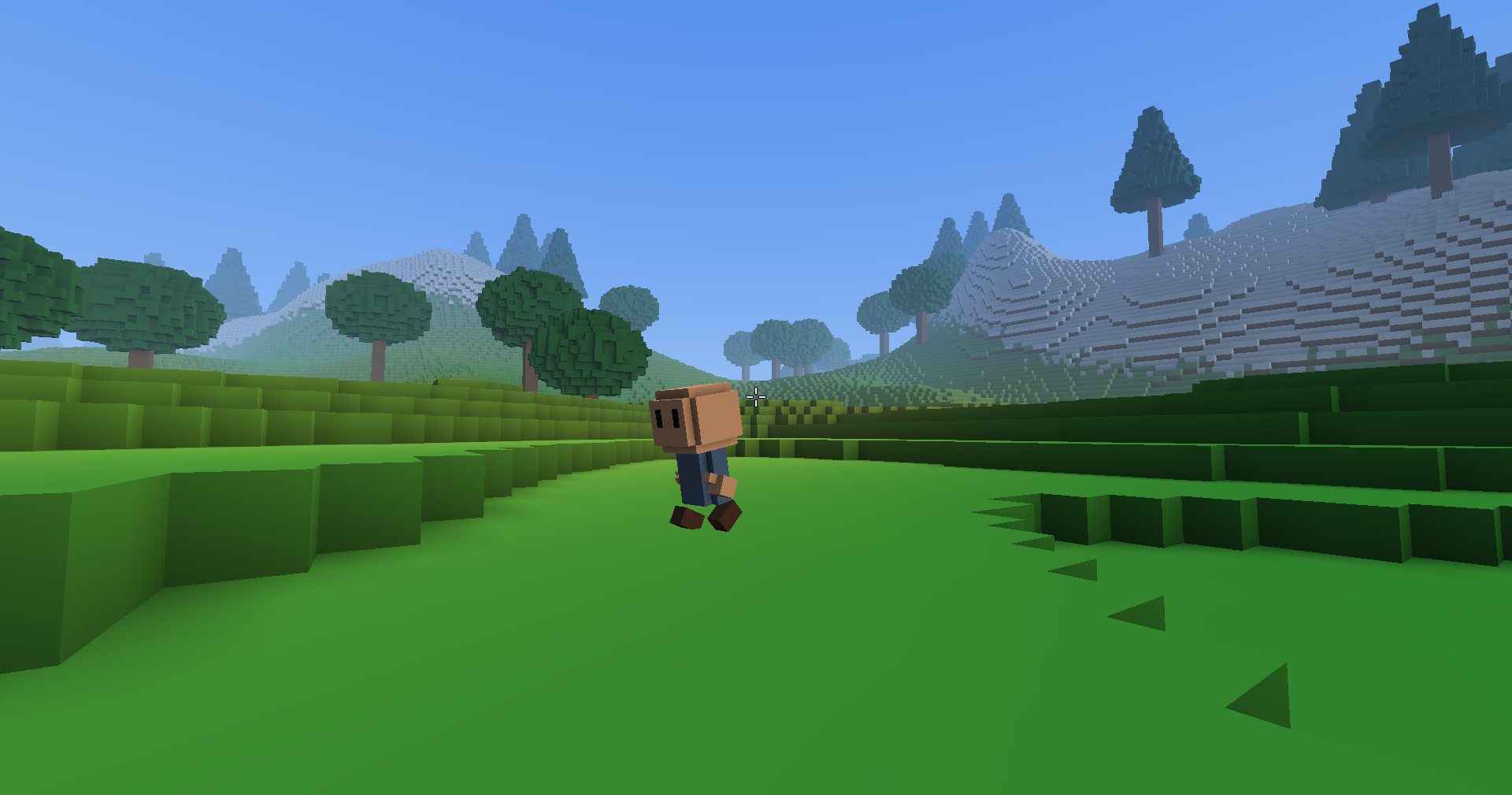
Feet and hands now swing from the hips and shoulders as a figure moves, with a small bob in each step. Running swings wider and faster and leans the body forward. The player and the wanderers use the same motions, and a figure standing still stands still.
Jumping, falling and flying
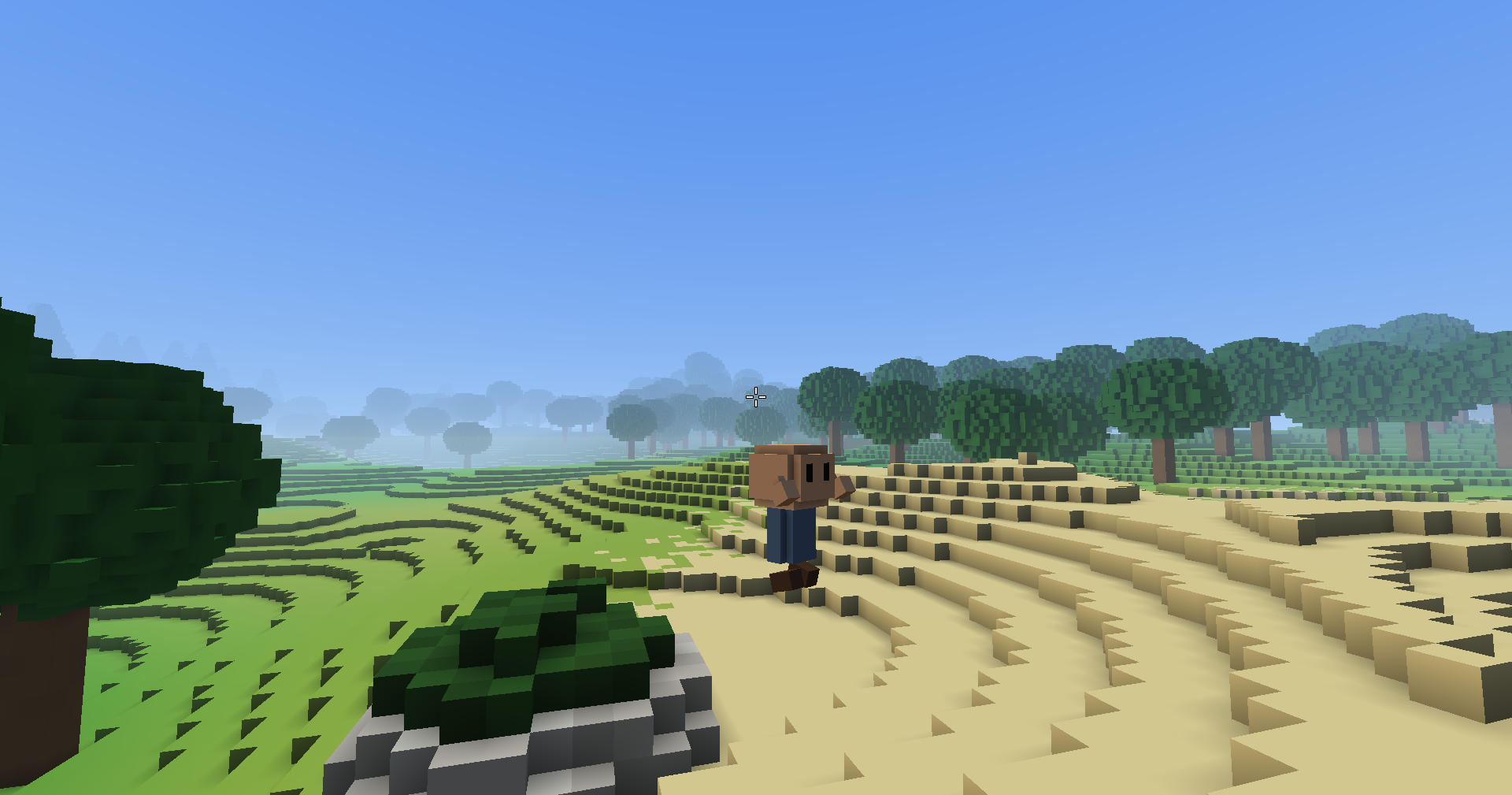
Each state in the air has its own pose, so it's clear what a figure is doing even with the sound off. A jump pose plays on the way up and a fall pose takes over from the top of the arc. Flying holds a pose of its own. Landing goes straight back to walking or running, and stepping down a single block stays on the ground rather than counting as a fall.
Climbing
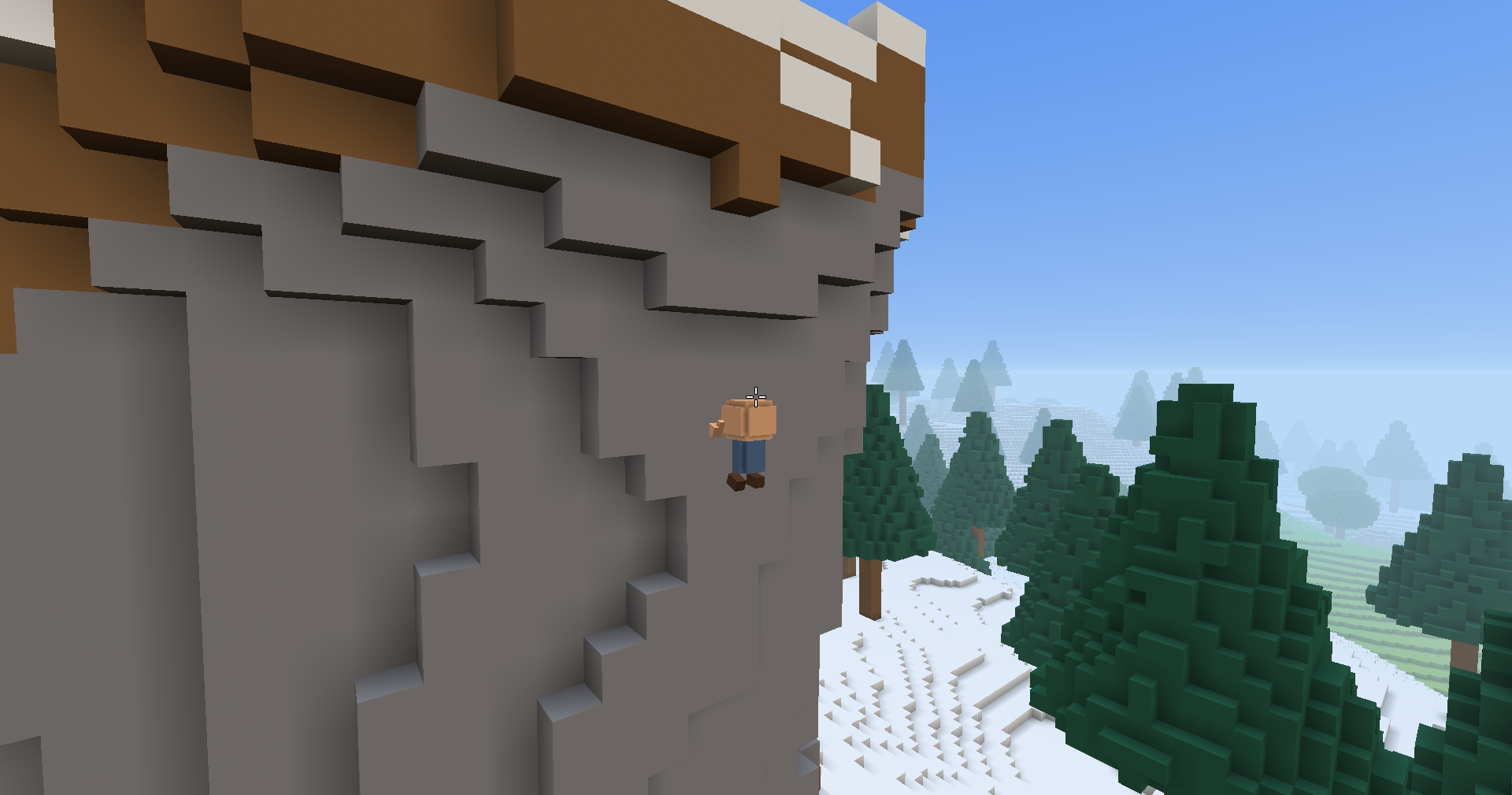
Press C against a wall and the player takes hold, whether standing, mid-jump or flying. From there the movement keys climb up and down and shuffle along the wall. Outside and inside corners are taken in stride, so a cliff that runs at an angle is climbed in a zigzag. A ledge pulls you up if there's room to stand, and reaching the top pulls you over it. Let go and you drop into the fall pose.
For now climbing is straight up and down only, so an overhang stops you. You can't swing while hanging on, and the last hit of a combo will knock you off. Wanderers don't climb yet.
Things built from parts
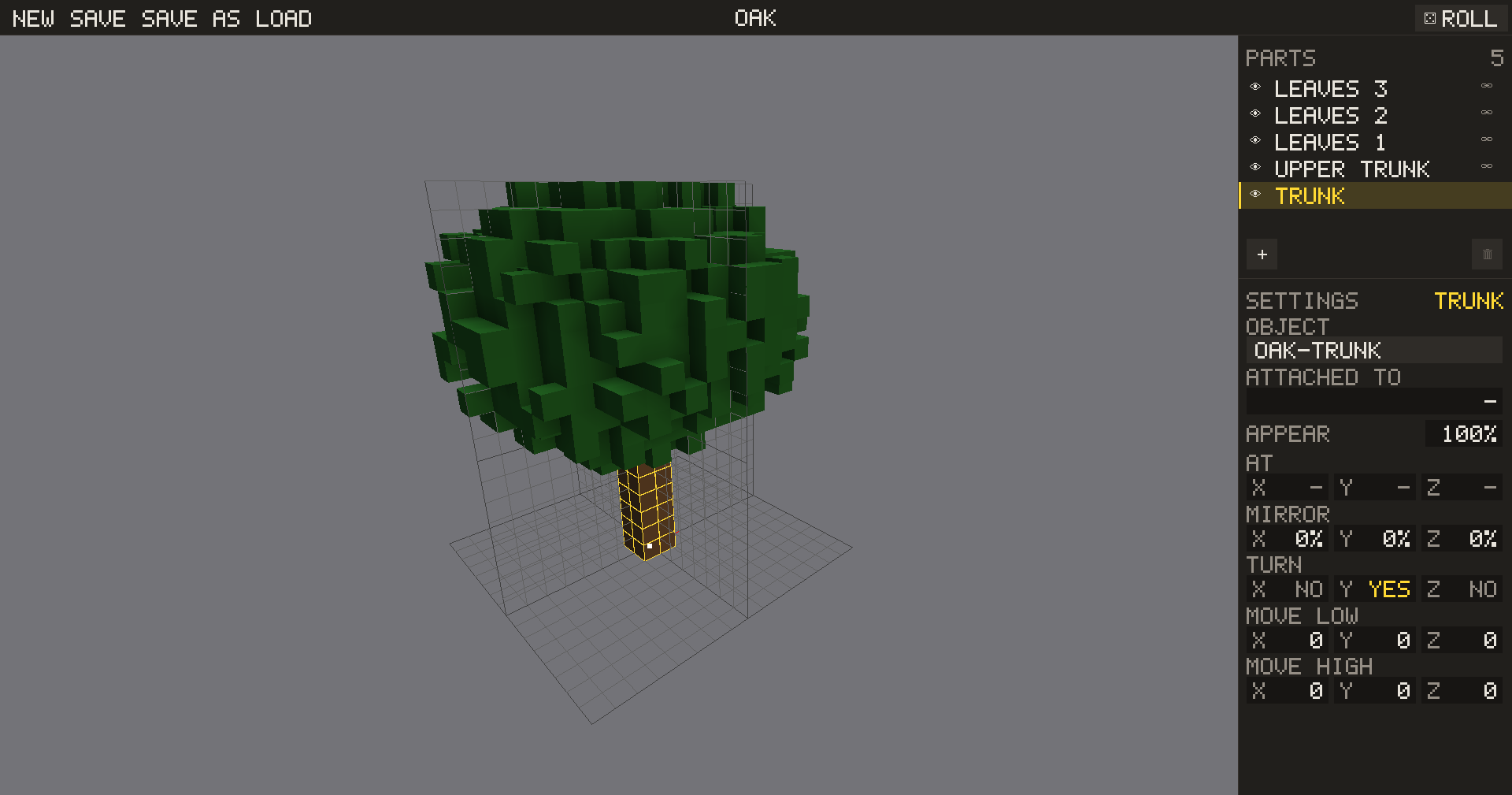
The world's things are now put together from parts. An oak, for example, is a trunk, an upper trunk and bands of leaves, each its own small object attached to another, and each part can still roll its own variations. The Object Creator gained a Body mode to match: it lists a thing's parts, and double-clicking a part opens it for editing, with a trail back to the whole.